Choosing a lot can shape your daily life just as much as choosing the floor plan. In Gentry Farm, that decision matters because the community offers larger homesites, a rural feel, and quick access to King and Winston-Salem, but not every lot will function the same way once a home, driveway, utilities, and yard are in place. If you want to feel confident before you move forward, this guide will help you look past the acreage number and focus on what really makes a lot work. Let’s dive in.
Start With the True Usable Space
Gentry Farm Phase II is advertised with more than 56 lots ranging from about 1/2 acre to 1+ acre, with sidewalks throughout the community. That sounds simple at first, but the best lot is not always the biggest one. What matters most is how much of that lot is actually usable after planning rules and physical features are considered.
A lot’s buildable area can shrink once setbacks, driveway placement, utility easements, and drainage areas are factored in. In King-area zoning, minimum lot sizes and yard requirements can vary by district, and in Stokes County an R-20 lot requires at least 20,000 square feet, 100 feet of width, a 30-foot front yard, 15-foot side yards, and lot coverage no greater than 30 percent. That is why you want to picture the actual footprint of the home and yard, not just the acreage listed on paper.
Ask for the Plat First
Before you fall in love with a lot, ask for the plat or site plan. You want to see lot lines, dimensions, setbacks, easements, drainage features, and utility locations in one place.
This step gives you a much clearer picture of what can fit comfortably. It also helps you avoid choosing a lot that looks spacious from the street but becomes tighter once the legal building envelope is mapped out.
Confirm the Jurisdiction
King spans both Stokes and Forsyth counties, so buyers should confirm whether a specific lot is inside city limits, in the ETJ, or under county jurisdiction. That matters because standards and approval processes can differ depending on where the lot sits.
If you are comparing multiple lots, make sure you are comparing them under the correct rules. A small detail on paper can affect what is allowed and how the lot is served.
Look Beyond Flat Versus Sloped
A gentle slope is not always a problem, and a flat lot is not always the easiest choice. The bigger question is how the land handles water, supports the home site, and affects the driveway and yard.
Stokes County subdivision rules require natural topography, slopes, drainage systems, and utility layouts to be considered in the planning process. For you as a buyer, that means a pretty lot may still create headaches if it holds water, needs heavy grading, or has a driveway approach that feels too steep for everyday use.
Walk the Lot After Rain
One of the smartest things you can do is visit the lot after a rain. Look for standing water, soggy areas, runoff paths, and whether the ground falls toward or away from the likely home site.
Pay close attention if the lot sits lower than the road or near a swale. King’s planning services page links flood-zone information, so floodplain maps and drainage easements are worth checking before you commit.
Think About Driveway Function
The driveway often gets less attention than the backyard, but it affects daily convenience. If the lot shape or slope forces a steep driveway, that can change how the home lives day to day.
You should also think about garage placement, parking, and how easy it will be to enter and exit. On a corner lot, sight lines matter even more because Stokes County restricts obstructions over three feet high within the 35-foot intersection triangle.
Pay Attention to Sun, Shade, and Trees
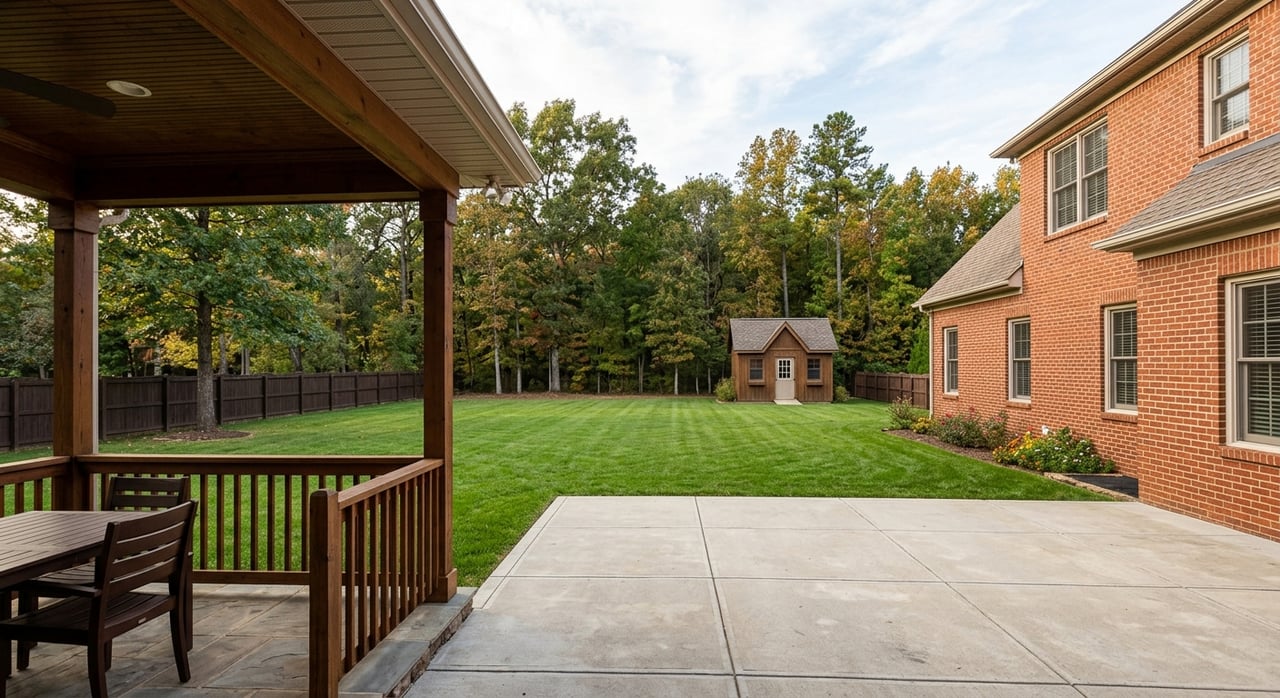
Lot orientation can change how your house feels in every season. The direction your backyard faces, where the sun hits in the afternoon, and how trees are placed all affect comfort, maintenance, and outdoor use.
NC State Extension notes that deciduous trees can help with summer shade while still allowing winter sun. It also recommends keeping large deciduous trees well away from the house on south and west exposures and avoiding too much shade close to the home, since excess moisture can increase maintenance needs.
Keep the Right Trees
Established trees can add beauty, privacy, and seasonal shade, but not every tree is in the right place. Large trees have root systems that can extend far beyond the visible canopy, so mature size matters.
As you walk a lot, try to identify which trees are worth preserving and whether any sit inside easements or utility areas. A tree that looks like an asset today could become a limitation if it conflicts with the home site, utilities, or long-term upkeep.
Match Orientation to Your Lifestyle
Think about how you plan to use the home and yard. If you love evening time outdoors, strong west sun in the backyard may matter. If you want more natural light indoors, orientation can make a big difference in how bright the home feels.
This is one of those details that is easy to overlook during a quick tour. Once you move in, though, you will notice it every day.
Verify Utilities Before You Decide
Gentry Farm currently lists City of King water, Duke Energy, and Piedmont Natural Gas. That is helpful community information, but you still need to verify how the specific lot will be served.
The biggest question is whether the lot has public sewer or will require a septic system. If a lot relies on on-site wastewater, North Carolina requires county health department involvement, and the first step is an improvement permit that considers the water supply and whether the lot can accommodate tanks, drainfields, and related components.
Sewer or Septic Matters
Two lots in the same neighborhood can function very differently depending on wastewater service. A septic lot may require enough suitable area for both the system and reserve space.
That can affect where the house sits, how the backyard is used, and what flexibility you have later. If public sewer is available, that may simplify planning for some buyers.
Ask About Utility Paths
It is also smart to ask where utility connections enter the lot. The shortest path is not always the easiest one if it crosses drainage features, trees, or easements.
A straightforward utility layout can make construction smoother. It can also help you better understand where patios, fences, or landscaping may fit in the future.
Consider Future Phases and Construction
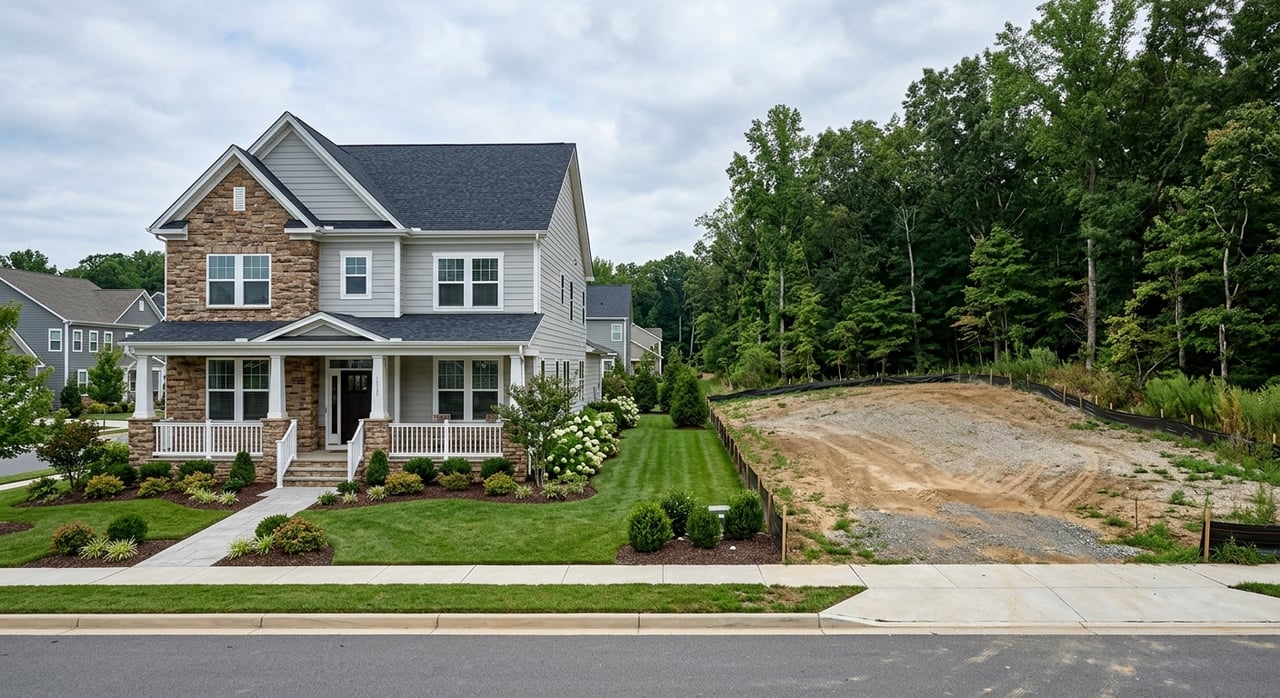
Buying in a growing community can be exciting, especially in a neighborhood like Gentry Farm that offers newer homesites near King. Still, the lot that feels quiet today may have a different setting once future phases move forward.
King’s subdivision process includes sketch plans, preliminary plats, construction documents, and final plat steps. Stokes County regulations also account for road rights-of-way, easements, utility connections, and phased development planning.
Ask What Is Coming Next
Before choosing your lot, ask what nearby phases, streets, sidewalks, buffers, or access points are still planned. You should also ask about the likely timing of future construction.
This helps you think ahead about privacy, traffic flow, and how much nearby building activity may continue after you move in. Even if you are comfortable with some construction, it is better to know what to expect.
Use a Simple Lot-Walking Checklist
When you visit Gentry Farm, bring a practical checklist so you can compare lots clearly and consistently.
- Confirm the exact lot number and recorded plat status
- Verify whether the lot is in city limits, the ETJ, or county jurisdiction
- Review lot dimensions, setbacks, easements, drainage areas, and utility stubs
- Walk the lot after rain to observe runoff and standing water
- Check slope at the driveway, garage area, and backyard
- Identify trees worth keeping and note any possible utility conflicts
- Verify whether the lot will use public sewer or septic
- Ask what future phases or nearby infrastructure are still planned
- Review floodplain maps and drainage easements if the lot sits low
- For corner lots, check visibility and the intersection sight triangle
The Best Lot Is the One That Fits How You Live
In Gentry Farm, the right lot is usually the one where your home plan fits comfortably, the ground drains well, utility service is clear, and the sun, shade, and trees work with your lifestyle. Bigger is not always better, and a lot that looks great from the curb can be less practical once the details are fully reviewed.
That is where local guidance can make a real difference. When you compare lots with a clear process and the right questions, you can move forward with much more confidence.
If you are weighing homesites in Gentry Farm and want practical, local insight, connect with Jerri Banner for clear guidance on choosing the lot that fits your plans.
FAQs
What should you check first when choosing a lot in Gentry Farm?
- Start with the plat or site plan so you can review lot dimensions, setbacks, easements, drainage features, and utility locations.
Why does lot orientation matter in Gentry Farm?
- Lot orientation affects sunlight, shade, yard comfort, and how the house may feel through different seasons.
Should you ask whether a Gentry Farm lot has sewer or septic?
- Yes. You should confirm whether the lot connects to public sewer or will require a septic system, because that can affect home placement and yard use.
How can slope affect a lot in Gentry Farm?
- Slope can affect drainage, grading costs, driveway function, and how usable the yard will be after construction.
Why do future phases matter when buying in Gentry Farm?
- Future phases can affect nearby construction, traffic patterns, privacy, sidewalks, and access points around your lot.
What makes one lot better than another in Gentry Farm?
- The best lot is usually the one where the house fits the legal building area, the land drains cleanly, utilities are practical, and the layout matches how you want to live.